Our Story
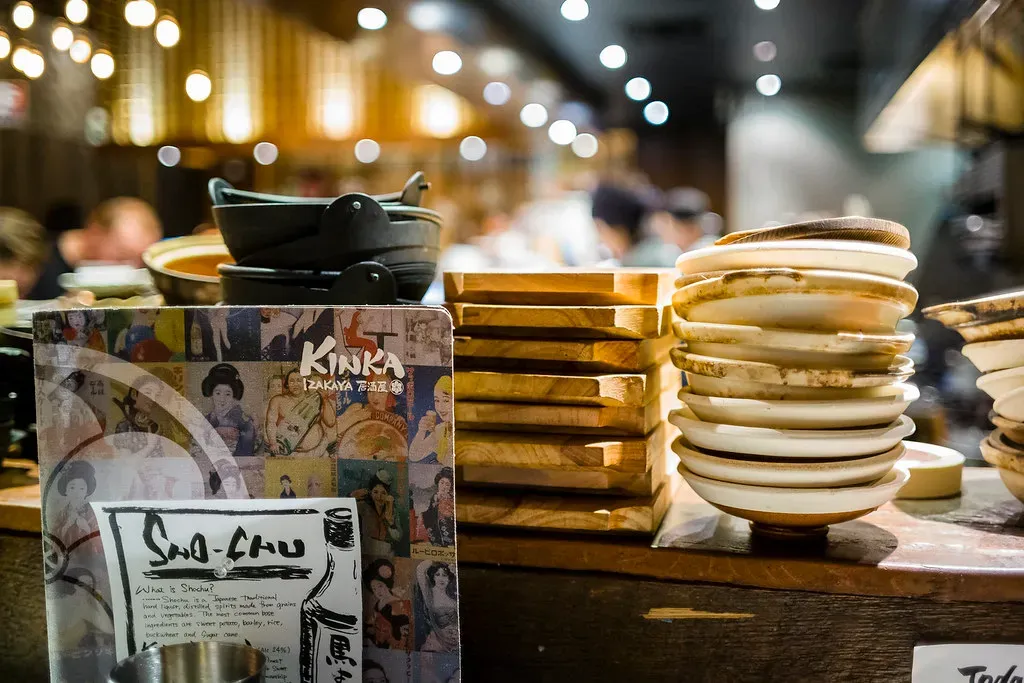
A conversation at a counter
It began by accident, over food.
In the autumn of 2011, two travelers ended up shoulder to shoulder at a six-seat yakitori counter in a back alley off Tokyo's Shinbashi district. One was an American engineer from Microsoft, in town on a business trip, with a weakness for anything cooked over charcoal. The other was a young bioengineer, in town for a conference, finishing a postdoc at Tsinghua University. Neither spoke much of the other's language. They communicated, mostly, by pointing at the grill and nodding.
What they discovered over the next four hours was a shared and slightly unreasonable conviction: that the best meat a person could eat was, almost certainly, meat that no living person had ever tasted. The conversation that followed, equal parts gastronomy and genomics, ended with a question neither of them could put down.
What if we could grow the most premium meat that ever existed?
The tooth
The conversation might have stayed a conversation, except that one of us had a relevant habit.
Long before Tokyo, our founder Rob had collected fossilized dinosaur teeth, an odd hobby he mostly kept to himself. Over the years it had taken him to the place most authentic specimens actually come from: the Saharan fossil trade of southeastern Morocco, in the souks of Rissani and Erfoud, at the edge of the Kem Kem beds, among the richest Cretaceous deposits on Earth. One tooth in his collection he had bought years earlier from a dealer named Brahim, in the Sunday market at Rissani, sold to him, as these teeth usually are, as a Carcharodontosaurus.
After Tokyo, he couldn't let the question go. On something between a whim and a dare, he packed that tooth into a padded envelope and mailed it to his friend and cofounder, Dr. Lei Chen, asking, essentially, whether there was anything left inside it.
There shouldn't have been. Across ninety-odd million years, DNA degrades to nothing many times over. The molecule does not survive that kind of time, and anyone who tells you they have dinosaur DNA is selling something. What Chen's team found instead was protein: trace peptide fragments, locked in mineral, far older than anything that was supposed to last. It was not a genome, but it showed that the deep past had left more of itself behind than anyone assumed.
That was when a yakitori-counter fantasy became a research program. The tooth told us it was possible. Which species we would actually bring back to the table was a decision we would not make for years.
Fifteen years, quietly
We did not announce ourselves in 2011, or for a very long time after.
For most of those years, we had nothing worth announcing. Working outward from those first peptide fragments, we had to reconstruct a usable genome by computational inference against living relatives, derive a viable cell line, persuade those cells to proliferate in a bioreactor, and coax them into something a chef would recognize as a cut of meat. Each of these was a multi-year problem, and they had to be solved in sequence before any of them mattered.
So we worked. Dr. Chen built and led a research team in Shenzhen, inside one of the densest genomics and bioprocessing ecosystems in the world. The commercial side took shape in South San Francisco. We raised capital privately, hired deliberately, published nothing, and let the deadlines we missed stay private along with everything else.
We stayed in stealth because the work was hard and because we preferred to be judged on a finished plate rather than a press release.
What we were waiting for
We set ourselves a simple, unforgiving bar: we would not emerge until we could serve something a discerning person would choose to eat again out of preference, after the novelty had worn off.
Reaching that bar meant accepting limits early. We cannot grow a living animal, and we never tried to; we grow muscle, not organisms. We cannot grow bone, so our bone-in cuts mature on a porcine scaffold. We confined our most sensitive genomic work to a jurisdiction where it was expressly permitted, and we kept it governed and documented. Working within those constraints is what turned an idea into a company.
2026
We are emerging now because the food is ready.
Our flagship line is Deinonychus, a lean, intense, deeply savory meat built for people who take the word "carnivore" seriously. Alongside it we are announcing Brachiosaurus, a milder, sweeter, herbivore profile and the first of the plant-eaters to come back to the table. Both began at the same charcoal counter, in the same improbable conversation, fifteen years ago.
We named the company for the era we are borrowing from, and for a promise we intend to keep:
Bringing the Taste of the Past, Tomorrow.